
Updated August 2025
Denka has been working to promote the use of renewable energy for over 100 years. We have developed technologies for generating renewable energy, primarily hydroelectric power, and technologies for making the most of this precious energy source in chemical manufacturing. Through the application of these technologies, we contribute to the conservation of the global environment and will further focus on our efforts to promote renewable energy, which is one of our strengths.
In order to achieve carbon neutrality by 2050, we have set out to expand green energy by increasing hydroelectric power generation and installing new solar power generation systems in our Mission 2030, and have commenced efforts aimed at achieving our goal of a maximum output of 150 MW from renewable energy power generation. Currently, we are working to improve the power generation efficiency of our existing hydroelectric power plants and are promoting the introduction of new solar power generation systems at each of our business sites. Furthermore, with a view to the medium- to long-term, we will accelerate our efforts to expand renewable energy by examining the possibility of introducing wind and geothermal power generation, focusing on the construction of new hydroelectric power plants.
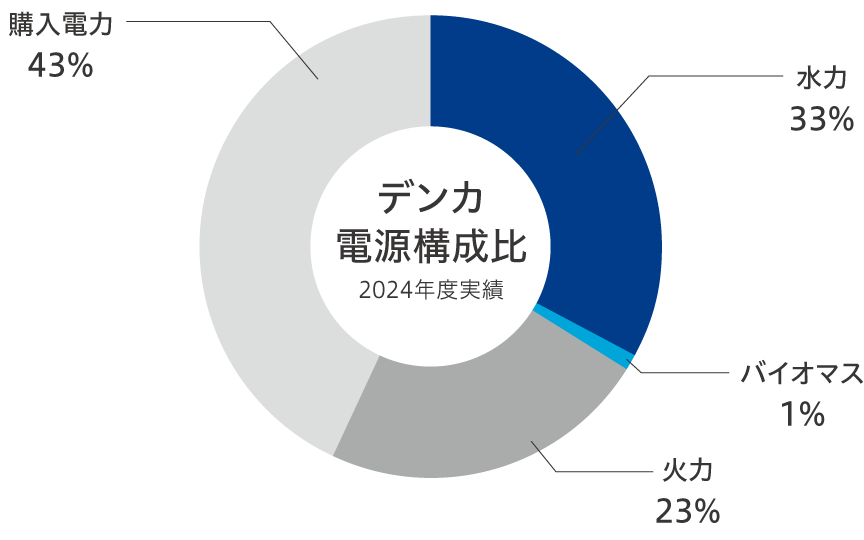
| Item | Scope | Unit | 2021年度 | 2022年度 | 2023年度 | 2024年度 | FY2025 Targets |
2030 Targets |
|
|---|---|---|---|---|---|---|---|---|---|
| Breakdown of Energy Consumption by Source | Hydroelectric | Non-consolidated sites | % | - | 32 | 39 | 33 | 37 | - |
| Biomass | Non-consolidated sites | % | - | 1 | 1 | 1 | 0 | - | |
| Waste heat power generation | Non-consolidated sites | % | - | 1 | 1 | 0 | 0 | - | |
| Solar power generation | Non-consolidated sites | % | - | - | - | - | 0.1 | - | |
| Fossil fuels | Non-consolidated sites | % | - | 21 | 23 | 23 | 24 | - | |
| Purchased electricity | Non-consolidated sites | % | - | 45 | 36 | 43 | 40 | - | |
| Total | Non-consolidated sites | % | 0 | 100% | 100% | 100% | 100% | - | |
| Breakdown of Energy Consumption by Source (energy/non-energy) | Renewable energy electricity mix + electricity mix with non-fossil fuel certificates / Electricity consumption | Non-consolidated sites | % | 33% | 33% | 40% | 33% | 37% | 76% |
| In-house Power Generation Capacity (maximum output) | hydroelectric power * | Non-consolidated sites / Domestic & Overseas Key production facilites | MW | 126.34 | 140.29 | 140.29 | 140.29 | 140.29 | 140.29 |
| Solar power generation (including sales outside of the FIT scheme) | Non-consolidated sites / Domestic & Overseas Key production facilites | MW | 2.99 | 2.99 | 2.99 | 3.89 | 5.79 | 9.71 | |
| Waste heat power generation/Biomass | Non-consolidated sites / Domestic & Overseas Key production facilites | MW | 11.1 | 11.1 | 11.1 | 11.1 | 0 | 0 | |
| Thermal power generation | Non-consolidated sites / Domestic & Overseas Key production facilites | MW | 62.405 | 66.305 | 66.305 | 66.305 | 66.305 | 66.305 | |
| Total renewable energy generation capacity | Non-consolidated sites / Domestic & Overseas Key production facilites | MW | 132.33 | 146.28 | 146.28 | 147.18 | 146.08 | 150 | |
| Total on-site power generation capacity | Non-consolidated sites / Domestic & Overseas Key production facilites | MW | 202.8 | 220.7 | 220.7 | 221.6 | 212 | 216 | |
| Fiscal Year 2022 Energy Consumption | Renewable energy consumption | Non-consolidated sites | MWh | 541,445 | 530,387 | 519,619 | 473,146 | 518,853 | - |
| Amount of non-renewable energy consumed | Non-consolidated sites | MWh | 1,121,524 | 1,083,241 | 783,894 | 974,399 | 898,393 | - | |
| Total | Non-consolidated sites | MWh | 1,662,969 | 1,613,628 | 1,303,513 | 1,447,545 | 1,417,246 | - | |
| Energy conservation | Compared to previous year (Target: 99% compared to previous year) | Non-consolidated sites | % | 101% | 101% | 101.5% | 98% | 99% compared to previous year | 99% compared to previous year |
Environmental Performance Data
There are 17 hydroelectric power plants in the vicinity of the Omi Plant, including the power plant of Kurobegawa Electric Power Company, which is a joint investment with Hokuriku Electric Power Company. The maximum output of these power plants is approximately 140,000 kW, making it one of the largest of all private manufacturing facilities in Japan. All of these power plants are "inflow type" hydroelectric power plants, which guide river water to the turbine runner and return it to the river after power generation, making it a method of power generation that places less burden on the natural environment. Hydroelectric power generation not only does not emit greenhouse gases, but is also one of the excellent renewable energy sources with high energy efficiency, and can generate electricity sustainably while coexisting with nature. We will effectively utilize this resource to contribute to the realization of a sustainable society.

 New Omigawa Hydroelectric Power Plant (Started operation in 2021)
 New Himekawa No.6 Hydroelectric Power Plant (Started operation in 2022)
In achieving carbon neutrality, streamlining energy use is one effective means. To date, we have promoted the switching of fuels at our thermal power plants, the introduction of high-efficiency gas turbine generators, and waste heat power generation at our cement plants, and have made efforts to use energy efficiently. More recently, in 2020, the opertaion of a high-efficiency gas turbine began at our Omi Plant, and in 2022, a similar gas turbine started operation at our Chiba Plant.
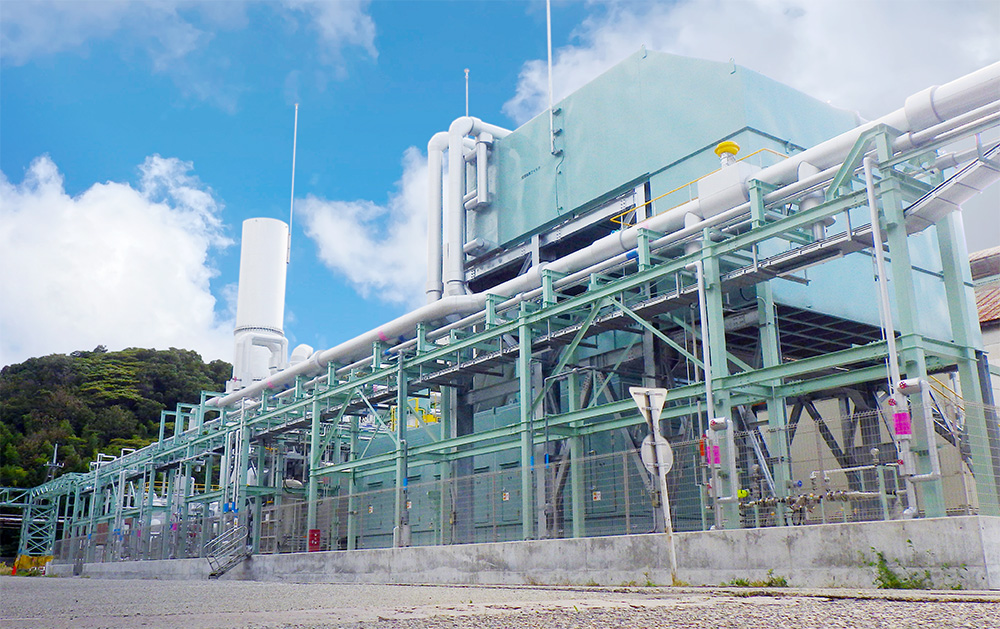 Gas turbine power generation facility at Omi Plant that commenced operation in 2020
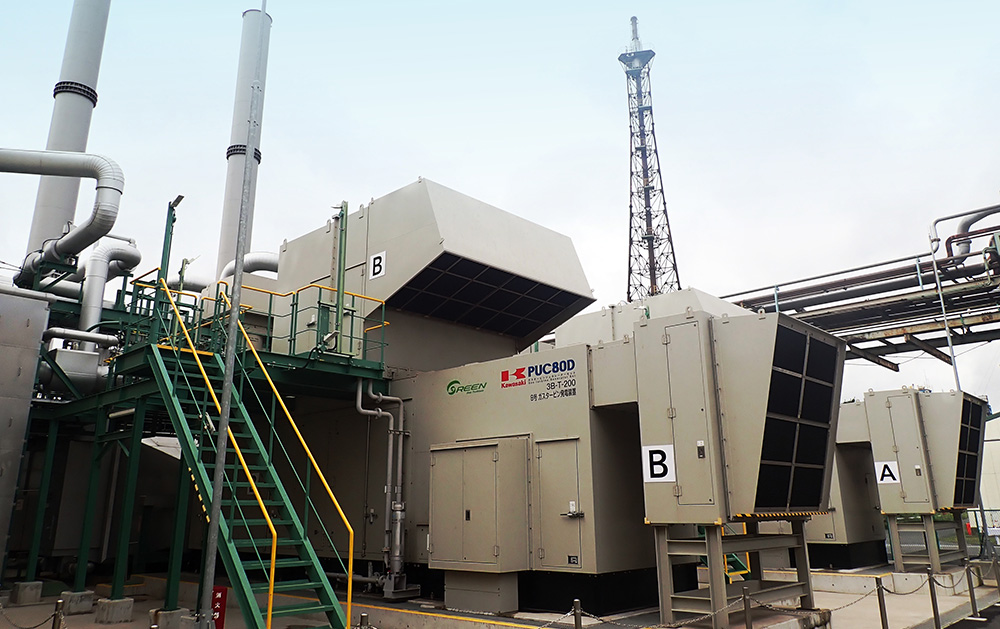 Gas turbine power generation facility at Chiba Plant that commenced operation in 2022
Since 2013, we have been installing solar power generation systems at our Shibukawa Plant and Isesaki Plant located in the Gunma Prefecture.
Currently, we are considering new candidate sites including our group companies and domestic plants. To achieve our non-financail KPI of our management plan "Mission 2030" of 150 MW maximum renewable energy output as early as possible and further increase this figure, we have commenced operation of solar power generation systems at our overseas sites (Vietnam). Furthermore, we plan to install solar power generation systems at our Chiba Plant and overseas sites (Singapore) by fiscal 2025.
 DENKA Solar Power Shibukawa
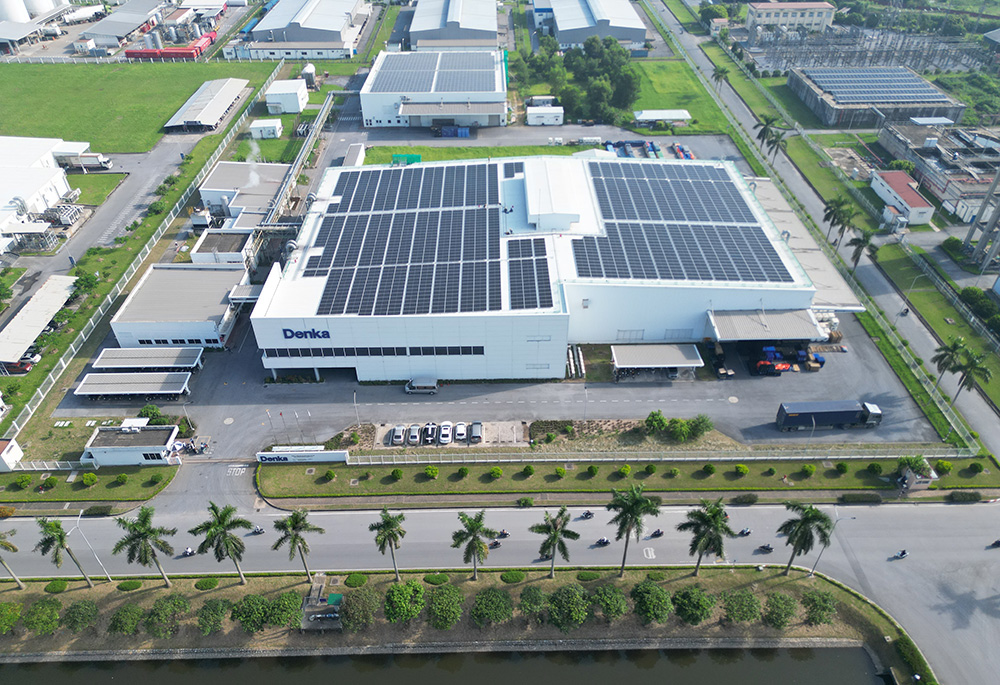 Denka Advanced Materials Vietnam Plant Solar Panels
Our company and Denka Kojundo Gas Kabushiki Kaisha ※ submit energy-saving investment plans to the Minister of Economy, Trade and Industry and implement these plans in order to receive the special measures for the surcharge system based on the Act on Special Measures Concerning the Use of New Energy Sources.
hydroelectric power plant (map)

| Facilities | Map | 2023年度 | 2024年度 | |||||||
|---|---|---|---|---|---|---|---|---|---|---|
| Maximum output (kW) | Company's maximum output (kW) |
Maximum output (kW) | Company's maximum output (kW) |
|||||||
| Hydroelectric | 1 | Omigawa | 3,300 | 3,300 | 3,300 | 3,300 | ||||
| 2 | Kotagikawa | 5,200 | 5,200 | 5,200 | 5,200 | |||||
| 3 | Mesh | 28,400 | 28,400 | 28,400 | 28,400 | |||||
| 4 | Oosogawa | 9,800 | 9,800 | 9,800 | 9,800 | |||||
| 5 | YOKOGAWA 1ST | 10,000 | 10,000 | 10,000 | 10,000 | |||||
| 6 | YOKOGAWA 2ND | 16,000 | 16,000 | 16,000 | 16,000 | |||||
| 7 | KAIKAWA DAIICHI | 3,800 | 3,800 | 3,800 | 3,800 | |||||
| 8 | Mikawa 2nd | 4,700 | 4,700 | 4,700 | 4,700 | |||||
| 9 | Kaigawa 3rd | 2,600 | 2,600 | 2,600 | 2,600 | |||||
| 10 | KAIKAWA YONTH | 990 | 990 | (FIT) | 990 | 990 | (FIT) | |||
| 11 | HIMEKAWA 6TH | 26,000 | Kurobe Electric Power Co. | 13,000 | 26,000 | Kurobe Electric Power Co. | 13,000 | |||
| 12 | Takiue | 15,000 | Kurobe Electric Power Co. | 7,500 | 15,000 | Kurobe Electric Power Co. | 7,500 | |||
| 13 | Mizuki | 5,000 | Kurobe Electric Power Co. | 2,500 | 5,000 | Kurobe Electric Power Co. | 2,500 | |||
| 14 | Sasakura No. 2 | 10,200 | Kurobe Electric Power Co. | 5,100 | 10,200 | Kurobe Electric Power Co. | 5,100 | |||
| 15 | Kita-Kotani | 10,700 | Kurobe Electric Power Co. | 5,350 | 10,700 | Kurobe Electric Power Co. | 5,350 | |||
| 16 | New Seihai River | 8,100 | 8,100 | (FIT) | 8,100 | 8,100 | (FIT) | |||
| 17 | Shinhimekawa No. 6 | 27,900 | Kurobe Electric Power Co. | 13,950 | (FIT) | 27,900 | Kurobe Electric Power Co. | 13,950 | (FIT) | |
| Hydroelectric Total maximum output | 187,690 | 140,290 | 187,690 | 140,290 | ||||||
| Total in-house consumption (excluding output for FIT) | - | 117,250 | - | 117,250 | ||||||
| Solar Power | Shibukawa | 1,990 | 1,990 | (FIT) | 1,990 | 1,990 | (FIT) | |||
| Isezaki | 1,000 | 1,000 | (FIT) | 1,000 | 1,000 | (FIT) | ||||
| DAV | 900 | (PPA) | 900 | (PPA) | ||||||
| Solar Total Maximum Output | 2,990 | 2,990 | 3,890 | 3,890 | ||||||
| Natural gas | Omi | 14,000 | 14,000 | 14,000 | 14,000 | |||||
| Waste heat/biomass boiler | Omi Cement | 11,100 | 11,100 | 11,100 | 11,100 | |||||
| Gas turbine/Co-generation | Omi (Tomi) | 34,685 | 34,685 | 34,685 | 34,685 | |||||
| Chiba | 16,620 | 16,620 | 16,620 | 16,620 | ||||||
| Diesel | Shibukawa | 1,000 | 1,000 | 1,000 | 1,000 | |||||
| Thermal Total Maximum Output | 77,405 | 77,405 | 77,405 | 77,405 | ||||||
| Total power generation capacity (including FIT) | 220,685 | 221,585 | ||||||||
| Total Maximun Output for In-house Consumption | 194,655 | 195,555 | ||||||||

Consideration for the Global EnvironmentDenka is committed to global environmental preservation based on Responsible Care, an initiative promoted by the global chemical industry. As a responsible chemical manufacturer, Denka will continue to address the issues of global environmental preservation.
2050 Roadmap Efforts to Reduce Environmental Impact Efforts for Environmentally Conscious Products Environmental Accounting
Denka Group is committed to achieving its target of "net zero CO2 emissions" by 2050. To this end, we have set the interim target of reducing CO2 emissions by 60% from the fiscal year 2013 level by 2030.
Denka accurately understands the environmental burden substances emitted from the production facilities of Group companies and is working on their continuous reduction. The substances targeted include greenhouse gases such as CO2...
Greenhouse gas emissions Zero emissions initiatives Information disclosure initiatives Fluorocarbons...
Addressing Risks and OpportunitiesRegarding the risks and opportunities posed by climate change, we will conduct scenario analysis based on the following two temperature rise scenarios: 1.5°C or less (Glasgow Climate Pact) and 4°C (business-as-usual).
Expansion of renewable energy and introduction of environmentally friendly power generation technologies Certification of special measures for levies based on the Renewable Energy Special Measures Act ...
hydroelectric power plant (Map) *As of August 2025 / Including our joint venture company's power plant. Private power plant and maximum output (20...
Use of environmental energy-related subsidies In our efforts to reduce environmental impact and promote energy conservation, we actively utilize subsidy programs from the Ministry of Economy, Trade and Industry and the Ministry of the Environment, etc.
Our Approach to Biodiversity Initiatives for Biodiversity Participation in TNFD Forum ...
Issues of the Company Group Specific Initiatives Water Resource Data Water Risk Assessment ...
Approach to resource recycling (circular economy) Chemical recycling ISCC PLUS certification ...
Environmental conservation costs Environmental conservation effect Economic effect Environmental conservation costs ...
Data Scope: Total of 8 locations of Denka head office (80% of Denka product sales manufactured) *Final disposal amount (landfill treatment) for FY2024...
Greenhouse gas emissions Renewable energy Main environmental impact (Head office and domestic group companies) Water resources Envi...
2024 Fiscal Year Main Substances Emitted and Water Used Ratios Head Office, Branch Offices Omi Plant Chiba Plant ...