
Updated August 2026
Coexistence with the natural environment is becoming increasingly important in the establishment of a sustainable society alongside climate change response, and the creation of international information disclosure frameworks is gaining momentum.
The Denka Group has established the ESG Basic Policy, which includes "Reducing Environmental Impact and Protecting Biodiversity." Under this policy, we are working to understand our environmental impact and promote the maintenance and enhancement of biodiversity in accordance with the guidelines published by the TNFD ※.
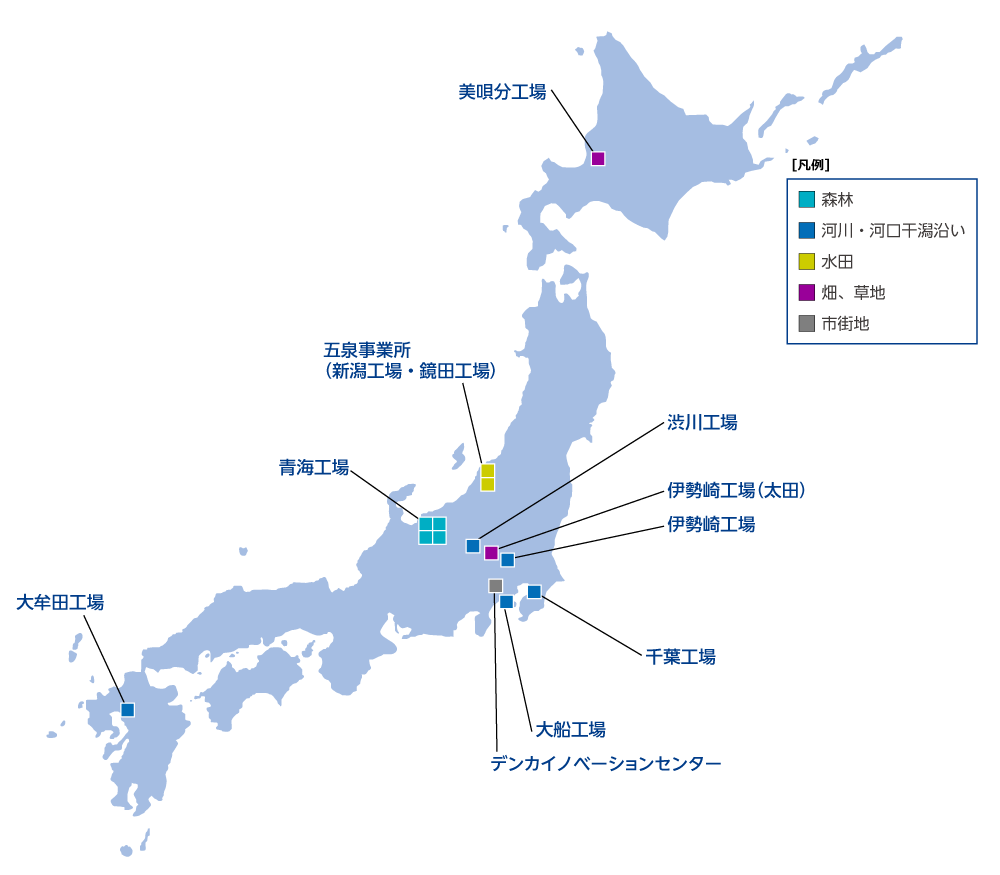
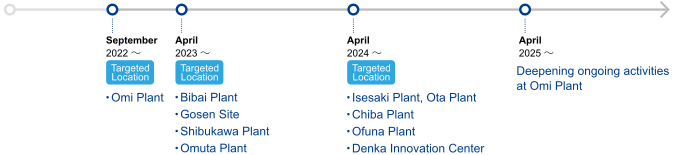
Since September 2022, we have been working on biodiversity initiatives with the aim of identifying the connections between our business activities and biodiversity, and understanding our priority issues. This initiative begins with Denka's 10 directly managed business sites (factories and research facilities) located throughout Japan. *1 Because these facilities are scattered and the surrounding natural environments vary, we conducted a survey of each business's connection to the natural environment from October 2022 to March 2025. (See "Preliminary Survey of the Natural Environment" below.)
Specifically, the LEAP approach recommended by TNFD *2 Using this method, we will understand the dependence on and impact on biodiversity and the natural environment within the scope of direct operations, which are considered to have a significant relationship between corporate activities and the surrounding natural environment within Denka Group 's value chain, and conduct an ENCORE analysis. *3 We will organize and disclose information about our efforts to promote, mitigate, and avoid this problem. In particular, we are undertaking company-wide initiatives, including the introduction of lighting that is less likely to attract insects at night and improving water quality by regularly cleaning the waterways on our premises.
Furthermore, when developing new land uses or changing existing land use methods, we assess the impact on biodiversity and strive to minimize any negative impacts if they are deemed likely.
Sites conducting preliminary survey of natural environment
TNFD LEAP Approach and Base Analysis
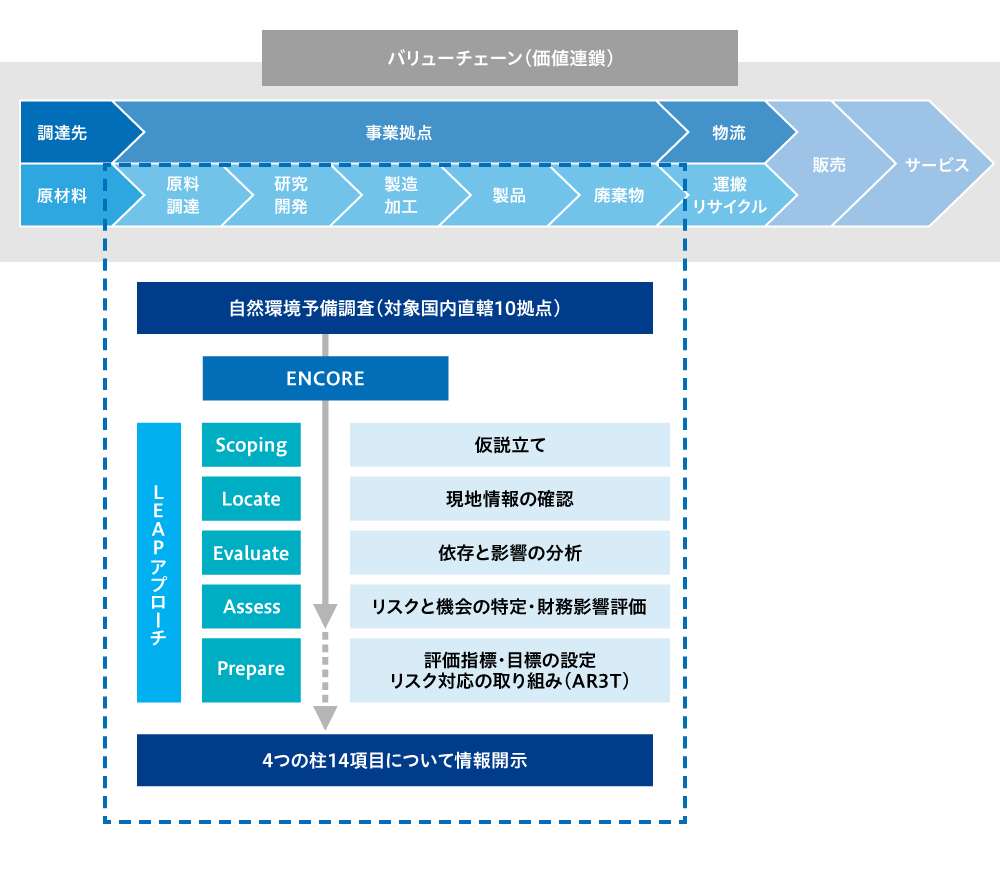
Denka has been conducting a quantitative assessment of biodiversity risks at its business sites since October 2022. For 10 domestic business sites, we are organizing environmental data (the presence of areas important for biodiversity around the factory, the presence of areas where ecosystem integrity is rapidly declining, etc.) and continuing activities to confirm points of contact with the natural environment from the perspective of location and operational activities.
In addition, we are promoting exchanges of opinions with local governments to consider regionally rooted initiatives, and are currently in discussions with the City of Machida, where the Denka Innovation Center is located, regarding activities for the conservation of rare plants.
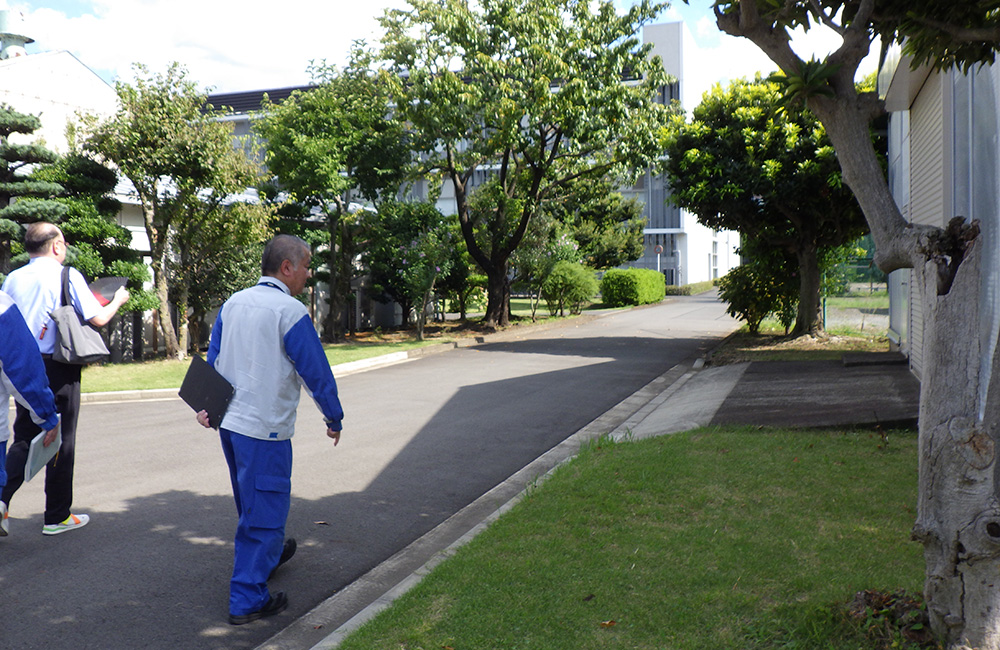 Confirmation of location environment of Denka Innovation Center
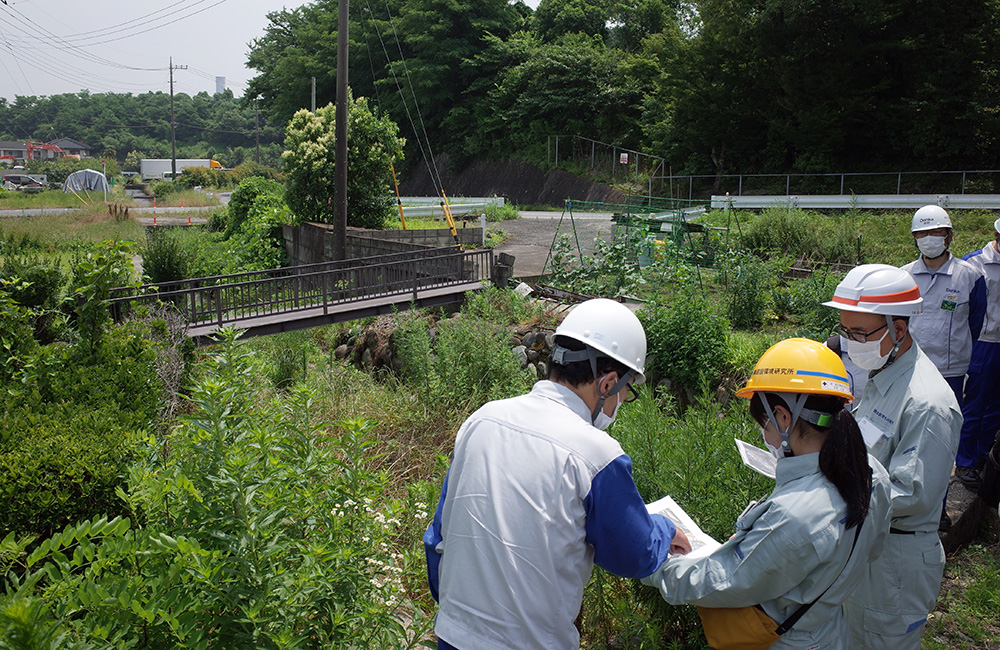 Confirmation of Shibukawa Plant wastewater route
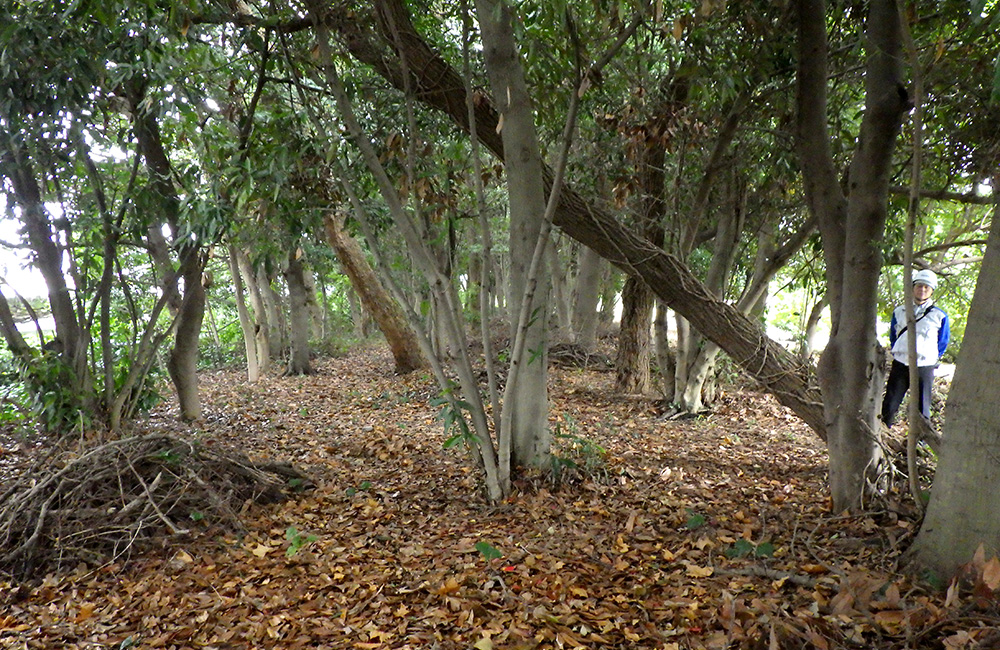 Green areas within Chiba Plant
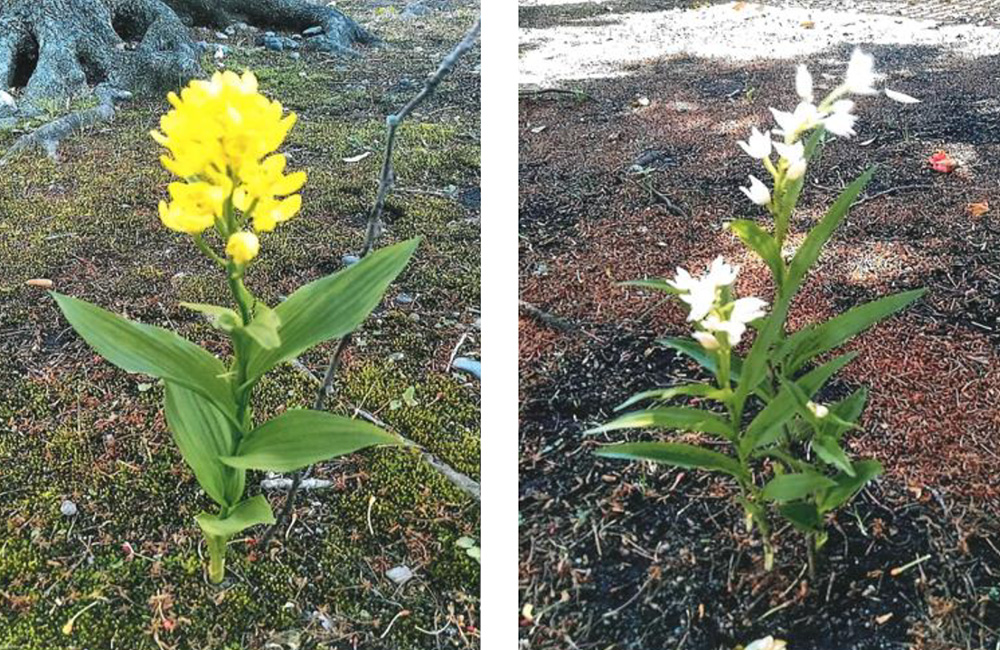 Rare species that grow naturally in the Denka Innovation Center
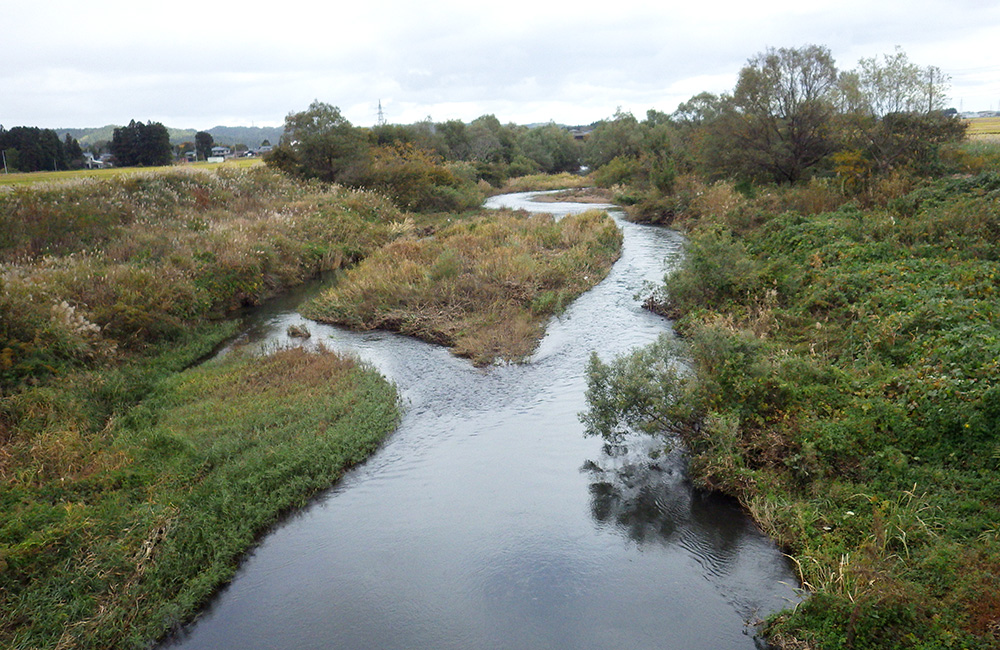 River environment near Gosen Site
| Base | Environmental Data Organization | On-site confirmation | Municipal hearing | Remarks |
|---|---|---|---|---|
| Omi Plant | 〇 | 〇 | 〇 | Additional interviews with local experts on regional natural environment and flora and fauna |
| Omuta Plant | 〇 | 〇 | 〇 | |
| Chiba Plant | 〇 | 〇 | 〇 | |
| Bibai Plant | 〇 | 〇 | 〇 | |
| Shibukawa Plant | 〇 | 〇 | 〇 | |
| Ofuna Plant | 〇 | 〇 | ― | Municipal hearing not conducted due to factory suspension |
| Isesaki Plant | 〇 | 〇 | 〇 | |
| Isesaki (Ota) Plant | 〇 | 〇 | 〇 | |
| Gosen Site (Niigata Plant, Kagamida Plant) |
〇 | 〇 | 〇 | |
| Denka Innovation Center | 〇 | 〇 | 〇 |
In assessing the potential impact of our business activities on biodiversity, we used the Environment Ministry's "Environmental Assessment Database (EADAS)" and the "KBA Map" from Conservation International Japan to examine the proximity of our sites to important biodiversity areas.
The survey targeted production sites in Japan within a radius of approximately 5 km (20 km for the Bibai Plant).
As a result, we confirmed that five of the following 10 sites are located in proximity to important biodiversity areas.
| Base | Proximity to KBA | Areas of biodiversity to be conserved |
|---|---|---|
| Omi Plant (including Tahi Plant) | 〇 | Myoko, Northern Alps |
| Omuta Plant | 〇 | Inner part of Ariake Sea |
| Chiba Plant | 〇 | Tokyo Bay |
| Bibai Plant | 〇 | Ishikari River Basin Lake and Marshland |
| Shibukawa Plant | × | - |
| Ofuna Plant | × | - |
| Isesaki Plant (including Ota Plant) | × | - |
| Gosen Plant (Niigata, Kagamida) | 〇 | Echigo Plain |
| Denka Innovation Center | × | - |
Furthermore, in order to protect the endangered species *Cypripedium macranthos* and *Cypripedium macranthos* that grow naturally within the Denka Innovation Center, we have installed protective fences to prevent people from entering the surrounding area and have continued to manage the area by measuring the number of plants for over 10 years.
Our company will continue its efforts to conserve and protect rare and endemic species whenever we identify them.
In 2022, we surveyed the 10 Denka domestic direct-controlled business sites to gain an overview of their principal business activities and analyze their dependence on and impact on nature using the ENCORE tool based on scientific evidence. The results are shown in the table below.
| Business locations | Main business activities | In accordance with | Impact | |||||||||||
|---|---|---|---|---|---|---|---|---|---|---|---|---|---|---|
| Water flow adjustment | Water supply | Purification of water | Purification of solid waste | Genetic resources | Educational and research services | Water use | GHG emissions | Emission of air pollutants other than GHG | Emission of pollutants to water and soil | Nutrient pollution to water and soil | Generation and release of solid waste | Confusion | ||
| Omi Plant (including Tami Plant) |
Carbide | High | High | High | Medium | High | High | High | Very High | Medium | High | Very High | ||
| Organic chemical products | High | High | High | High | High | High | High | Very High | Medium | High | Very High | |||
| Special blended agent | Medium | Medium | Medium | Medium | Medium | High | High | Very High | Medium | Medium | Medium | |||
| hydroelectric power | Very High | Very High | High | Very High | Very High | |||||||||
| Chiba Plant | Styrene resin | Low | Low | Medium | Medium | Low | Medium | Medium | Very High | Medium | Medium | High | ||
| Omuta Plant | Thermal conductive materials | Low | Low | Medium | Low | Medium | Medium | Very High | Medium | Very High | ||||
| Shibukawa Plant | Adhesive Temporary fixing material |
Low | Low | Medium | Medium | Low | Medium | Medium | Very High | Medium | Medium | Very High | ||
| Heat-dissipating substrate Electronic element |
Low | Low | Medium | Low | High | Medium | ||||||||
| Isesaki Plant (including Ota Plant) |
Styrene-based resin sheet |
Low | Low | Medium | Medium | Low | Medium | Medium | Very High | Medium | Medium | High | ||
| Bibai Plant | Colgate | Low | Low | Medium | Medium | Low | Medium | Medium | Very High | Medium | Medium | Very High | ||
| Gosen Site | Vaccine Test reagent |
High | High | Very High | High | Very High | Medium | High | High | High | High | High | High | |
| Innovation Center |
Applied research | High | High | Very High | Medium | High | ||||||||
In the sectors applicable to Denka's domestic direct-controlled business sites, an ENCORE analysis revealed a strong impact on natural capital and a high level of dependence on ecosystem services in the categories of "water," "greenhouse gases," "water and soil pollutants," "solid waste," and "disruption." In particular, the Omi Plant's hydroelectric power generation has a strong level of dependence and impact on water, and therefore, the areas in which the Omi Plant's hydroelectric power generation has a presence were designated as "priority areas." As a measure for the surrounding environment at the Omi Plant designated as a "priority area," we are implementing initiatives to mitigate negative impacts on biodiversity by introducing lighting that is less likely to attract insects at night. In addition, as a measure for the hydroelectric power plant located in a "priority area," we are regularly cleaning the waterways on the premises to improve water quality and increase positive impacts on biodiversity.
| Points of Contact Between Business Activities and Nature | Dependence and impact on nature | ||||||||
|---|---|---|---|---|---|---|---|---|---|
| Value chain | Name of base/facility | Business activities | Target area etc. | Relationship with the natural environment | Dependent | Impact | Integrity of ecosystems | Importance of biodiversity | Water stress |
| Procurement of raw materials | Water source conservation forest | Conserving water sources | Himekawa and other upper and middle reaches | The water source for hydroelectric power and industrial water uses important habitats for living organisms. | ○ | ― | High | High | ― |
| Weir | Water intake | Himekawa, Aomikawa, Umikawa, Hayakawa | Water intake weirs have been installed on the rivers such as the Himekawa. | ○ | ○ | High | High | High | |
| Transmission line | Transmission | Transmission line area | Power lines installed in the habitat of birds | ― | ― | Small | Large | ― | |
| Manufacturing | Manufacturing site | Manufacturing | Factories and surrounding areas | There are secondary forests and the Aomi River around the waste storage site. | ― | ○ | ― | High | ― |
| The intake and discharge of water is conducted using the Omi River. | ○ | ○ | High | High | High | ||||
| The factory green space faces a secondary forest and part of it is also used as a green space. | ○ | ― | Medium | ― | ― | ||||
| hydroelectric power facilities | Power generation | Around power generation facilities | Using river water such as the Himekawa for power generation | ○ | ― | Small | Small | Small | |
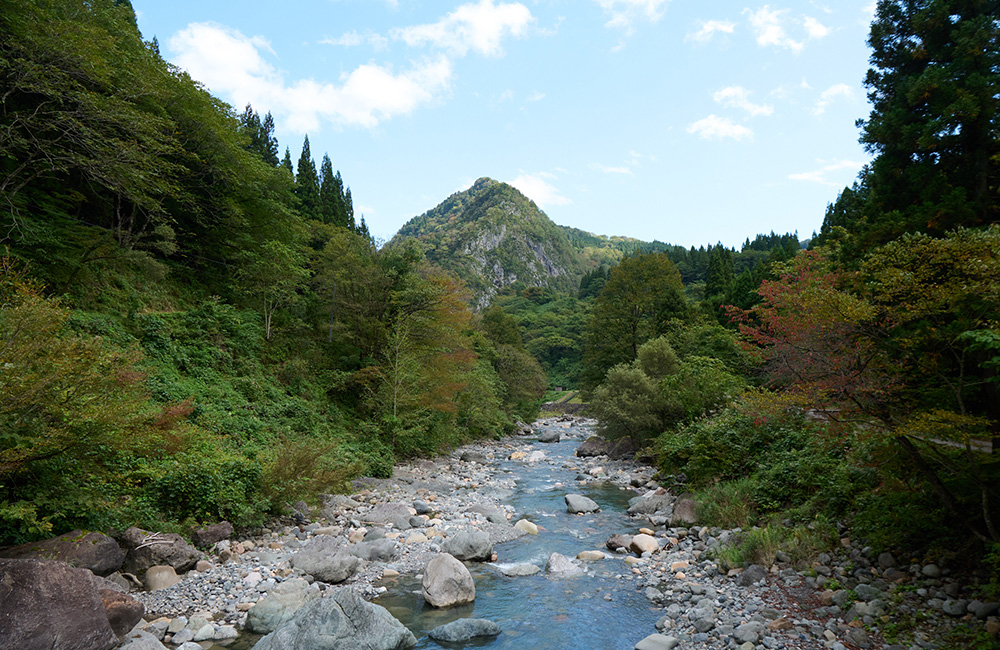 State of catchment area
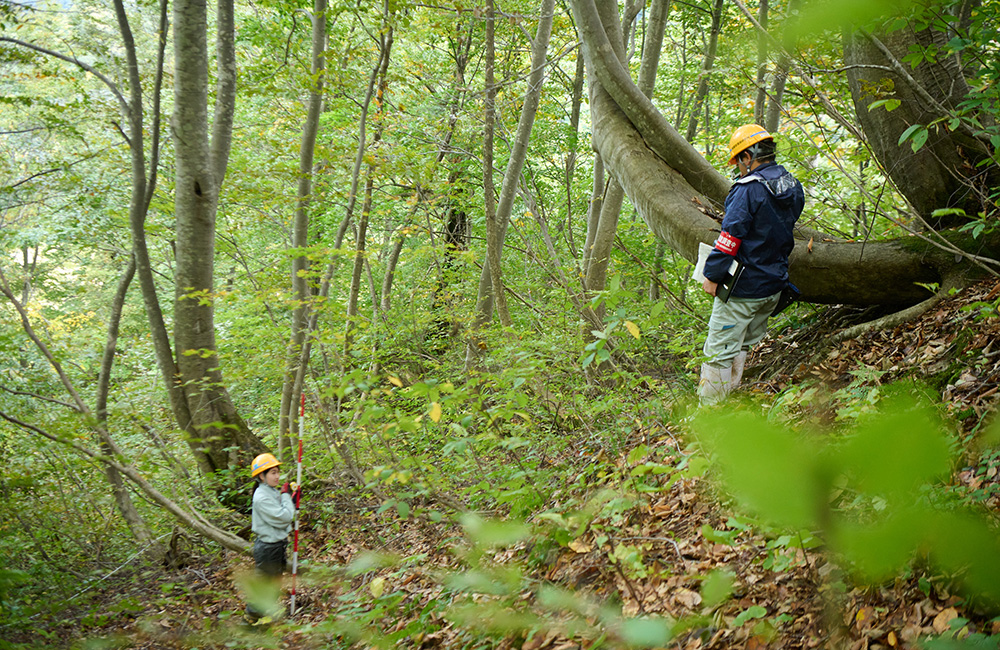 Survey of natural environment of water source conservation forest
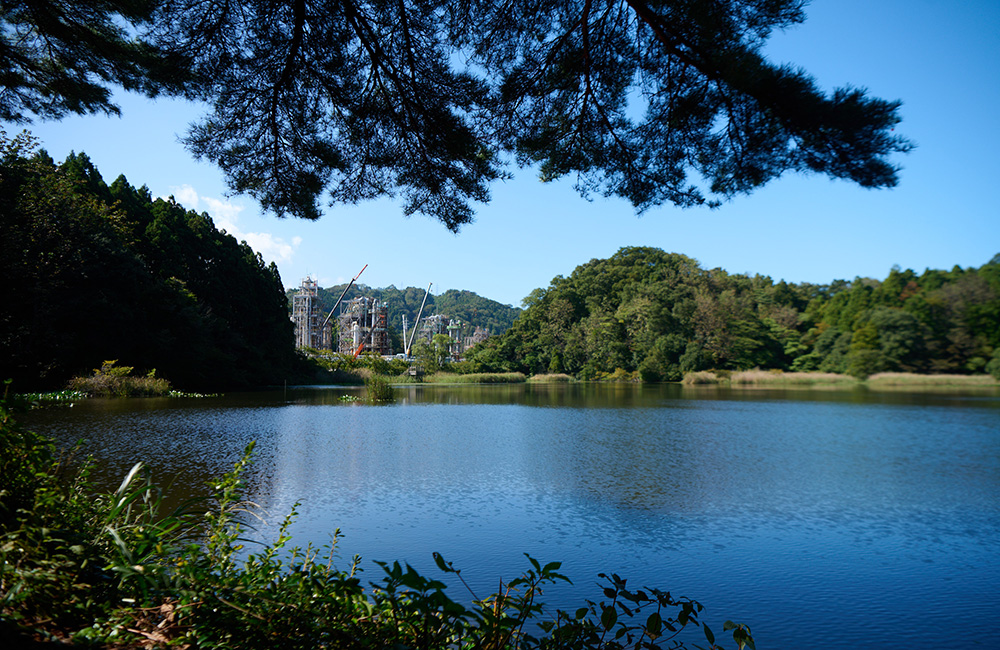 A place of relaxation for local residents: Tamika Pond and factory
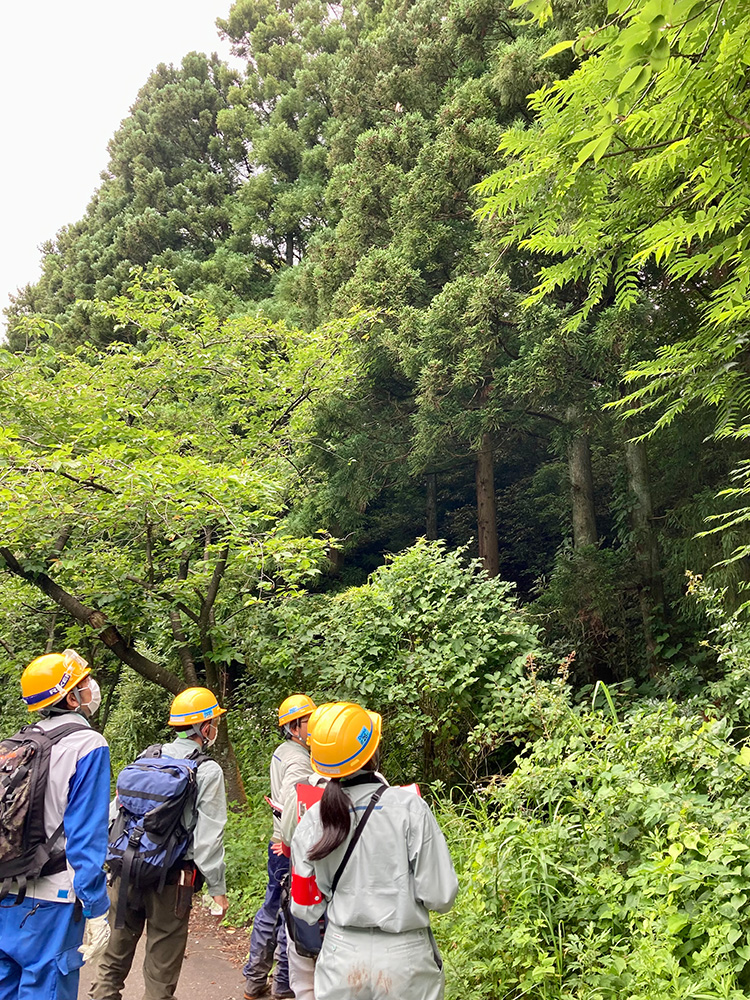 Investigation of natural environment in green space at Tomi Plant
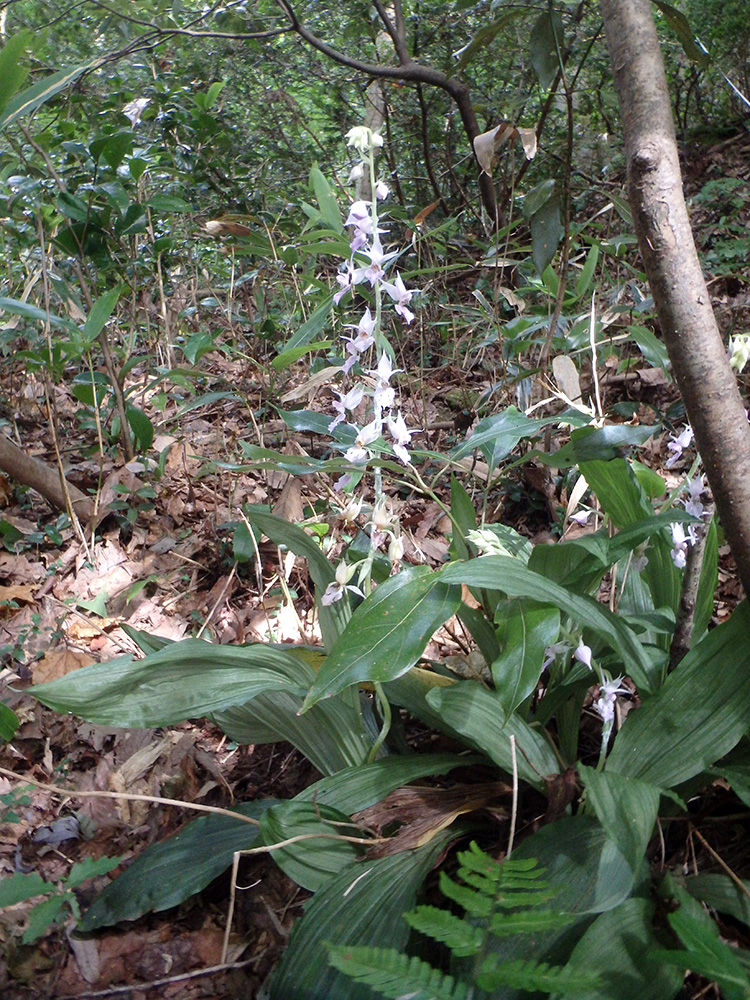 Rare species Natsuebine (Orchidaceae) confirmed in the green space of Tomi Plant
The Denka Group recognizes that nature-related risks and opportunities at the Omi Plant arise from the relationship of dependence and impact on natural capital, and from this perspective, we will identify important risks and opportunities, and for the assessment, we will formulate future world hypotheses based on the scenario analysis guidance provided by the TNFD, and examine and analyze them based on the two axes of likelihood ※5 (feasibility ※6) and severity ※7 (impact ※8), and identify them. (See table below.)
| TNFD classification | Analysis of risks and opportunities | Scenario | Assumptions for impact calculation | Financial impact |
Countermeasures | |
|---|---|---|---|---|---|---|
| Transition | Regulations |
|
|
|
Medium |
|
| Policies |
|
|
|
Large |
|
|
| Physics | Chronic | (Indirect damages)
|
|
|
Small |
|
| Acute | (Direct loss)
|
|
|
Medium |
|
|
| Corporate Performance | <translation>Market</translation> |
|
|
|
Large |
|
| Reputation |
|
|
|
Small |
|
|
Based on the importance assessment of risks and opportunities related to natural capital at the Omi Plant, we estimated the financial impact and conducted an evaluation.
The evaluation of financial impact was conducted using the severity of risks and the degree of impact of opportunities, using Denka's performance data, set values, and publicly available parameters related to the listed items. Furthermore, the likelihood of risk occurrence and the feasibility of opportunities were qualitatively assessed considering Denka's case studies and trend forecasts for each scenario.
The importance and financial impact assessments of nature-related risks and opportunities at the Omi Plant, which has been designated as a priority area, led to the identification of priority issues (materiality). The formulation of response measures adopts the "AR3T Framework ※9" proposed by SBTN, and our efforts are organized according to the steps from avoiding and reducing impacts to restoring and regenerating nature, and further to contributing to system transformation.
Starting in fiscal 2026, we will formulate specific measures for priority issues identified at the Omi Plant, and set targets and indicators for evaluating these measures (KPI). In implementing these measures, we will place importance on collaboration with government agencies related to Denka and communication with experts involved in the local natural environment of the Omi Plant, and aim to connect these efforts to specific environmental conservation activities as the Denka Group.
Furthermore, in order to achieve the Denka Group's environmental materiality of "environmental conservation and minimization of environmental footprint," we will accelerate the transition to a nature-positive approach and the establishment of sustainable business models, with a view to expanding our efforts to the value chain (upstream and downstream).
In August 2024, the Company became a member of the Taskforce on Nature related Financial Disclosures (TNFD), an international initiative on biodiversity.

In October 2024, the Company will join the Keidanren Nature Conservation Council ※ and make social contributions to biodiversity through the Biodiversity Declaration Initiative.
Our company sells “Biomass BOPS”, which maintains the transparency, rigidity, and food safety of the sheet “BOPS” made from biaxially stretched polystyrene resin while allocating biomass-derived raw materials using a mass balance approach.
This product is part of a product group that has received ISCC PLUS certification, an international certification system that manages and guarantees products using sustainable raw materials such as recycled materials and biomass throughout the supply chain.
By curbing the use of fossil resources and promoting the use of renewable resources, our company aims to reduce the burden on ecosystems and conserve biodiversity through product development and the use of sustainable raw materials, thereby contributing to the realization of a recycling-oriented society and coexistence with the natural environment.
Denka collaborates with governments, local authorities, companies, and regional communities through various activities, including participation in initiatives such as the 30by30 Alliance and climate change initiatives, for the conservation of regional biodiversity at 10 domestic directly controlled sites including the Omi Plant, which has been designated as a priority area.
Under the resource recycling brand "D-NODE™", the Denka Group is building a recycling-oriented model that maximizes resource value and reduces waste by utilizing chemical recycling technology for polystyrene. In Ichihara City, Chiba Prefecture, through a public-private partnership with local residents and TOYO STYRENES (a group company), we collect used polystyrene at 14 public facilities and re-resource it from target products with a sorting accuracy of over 85%. This reduces CO 2 emissions by about 40% compared to incineration treatment. Furthermore, this initiative contributes to biodiversity conservation through the reduction of environmental impact on nature through the proper disposal of waste. With one of the largest polystyrene production capacities in Japan, we will leverage our social influence to promote the establishment of a sustainable resource recycling and ecosystem conservation balance by deepening collaboration with local governments, companies, and regional communities in addition to expanding our processing capacity.
At the Shibukawa Plant, cleaning activities for agricultural water channels in the factory premises and adjacent areas are conducted in cooperation with the water use association of the Nakamura district where the factory is located. This activity is conducted every year before rice planting, contributing to the stable supply of agricultural water, protection of rice paddies, and support for rice cultivation, as well as helping maintain the ecosystem of various organisms living in the rice paddies.
 Cleaning of waterway garbage and weeds, and removal of sediment and algae

Consideration for the global environment Support for the RC World Charter (2014 version) ...
Denka accurately understands the environmental burden substances emitted from the production facilities of Group companies and is working on their continuous reduction. The substances targeted include CO2,...
Greenhouse Gas Emissions Zero emissions initiatives ...
Addressing risks and opportunities Addressing risks and opportunities
Expansion of renewable energy and introduction of environmentally friendly power generation technologies In accordance with the...
Company's Approach to Biodiversity The Company recognizes that biodiversity is the basis of the ecosystem that supports human life and corporate activities. The Company also recognizes that the loss of biodiversity due to human activities is a serious global issue. Therefore, the Company is committed to protecting biodiversity and promoting the sustainable use of biological resources in its corporate activities. The Company will also contribute to the conservation of biodiversity through its business activities.
Approach to Resource Circulation (Circular Economy) Chemical Recycling ...
2025 Main Substances Emissions and Water Usage Ratios Headquarters ...